armed guards

A Firearm Changes More Than the Security Uniform

The presence of a handgun does change the document requirements, but not the security considerations. For companies considering armed guards, the decision should also be based on the specific security risks involved.

Within Malaysia, a guard is not necessarily the same as a private security guard. The guidelines issued by the Ministry of Home Affairs require that, when a private security firm engages in armed operations, the firm must hold the necessary firearm license, and the guard must be licensed to carry the firearm.

This is critical for those companies considering engaging an armed guard service. The first thing that comes to mind should not be the number of guards required, but whether the situation warrants armed personnel.

Armed security has a defined role

Several types of armed security operations are listed in the guidelines provided by KDN. These include static guarding at locations such as banks, jewelers, and all other facilities requiring armed guards, Cash in Transit, moving of valuables, armed patrols, close personal protection, and maritime security.

One commonality between most tasks listed is the potential for violent attacks.

A firm that handles large amounts of cash will face a higher level of risk than a business dealing with security issues such as visitor entry and unauthorized parking.

The amount of security measures required must reflect the differences mentioned.

The use of a weapon doesn’t necessarily improve access control, visitor management, or incident reporting in a low-risk post. The issues mentioned above can be addressed effectively using procedures, CCTV cameras, lighting improvements, or electronic access systems without additional staff.

The firearm cannot be separated from the person carrying it

The security needs of Malaysia recognise the need for additional skills for an armed post.

In compliance with KDN guidelines, all individuals in security roles who use firearms should receive basic training and education about firearms and any related legislation governing weapons and ammunition from accredited institutions. In addition, all armed individuals are supposed to practice shooting at intervals of once per year.

There are other needs beyond equipment usage.

An individual armed security officer may have to make certain decisions during emergencies in the presence of members of the public, staff or even customers. This means communication, judgment and procedures will still remain relevant.

Aggressive behaviour on the part of a guard when dealing with routine conflicts does not make him more suitable simply because he is armed.

Licensing should be independently checked

Malaysia has substantial control over firearms as well.

It is illegal under the Arms Act 1960 to possess, carry and use any arms and ammunition without a permit. The firearms regulations on the KDN website (July 2026) state that there is no legal right to own a firearm, and applications are considered on an individual case-by-case and needs basis. The licensing of the firearms is managed by the Royal Malaysian Police.

Under the Private Agencies Act, private security agencies operate separately from the police and fire departments and are regulated by the eSIMS system on the KDN website, which enables members of the public to verify whether the security agency is licensed for the year they operate.

A business needs to ensure that the company offering armed guard services has the proper license to operate and that the guards and guns brought to the site comply with the regulations.

The KDN guidelines require armed guards to have a Carry & Use permit or firearms card with them whenever they are carrying and using a firearm. It does not permit the renting out of company firearms, nor does it permit the use of company firearms in any subcontracted assignment.

The site procedure becomes even more important

An armed assignment requires very clear boundaries.

The client and security provider should agree on:

  • what risk justifies the armed post;
  • which locations and duties fall within the assignment;
  • who supervises the personnel;
  • how incidents are escalated;
  • how shifts and handovers are recorded;
  • how emergencies involving police or other authorities are managed.

These are not questions of tactics but of management. Their purpose is to avoid misunderstandings about the job that could result in injury to oneself or others.

The operations of a jeweler’s business would be very different from those of a cash transport business or a secure industrial business.

More visible security is not always more appropriate security

There could be an assumption that an armed presence equates to greater security. Security is seldom that simple.

Where the assessed risk and potential losses justify the need for visible armed guards, this can make sense. In other cases, they can add to the cost and complexity without effectively addressing the most common security problems.

An office which uses its security system mainly as a way of controlling visitors may find it more useful to improve their access systems. The first thing for a warehouse dealing with stolen stock may be to improve its internal security and monitoring. Whether a company reaches this conclusion may depend on their own risk assessment.

In deciding whether or not to go with armed guards, check with security firms what specific risk an armed guard service addresses that other services do not.

A reliable security provider should be able to explain why having a weapon does not necessarily equate to having better security.

Weapons are currently regulated under a system that recognises the need for their controlled use, mandating licensing, training, and oversight in Malaysia. Companies that employ private security personnel should follow suit.

Do not confuse the toughest of all security solutions with the best. Rather, it is the one that is equal to the threat that an organization faces.

unarmed guard

The Most Important Security Intervention May Be a Conversation

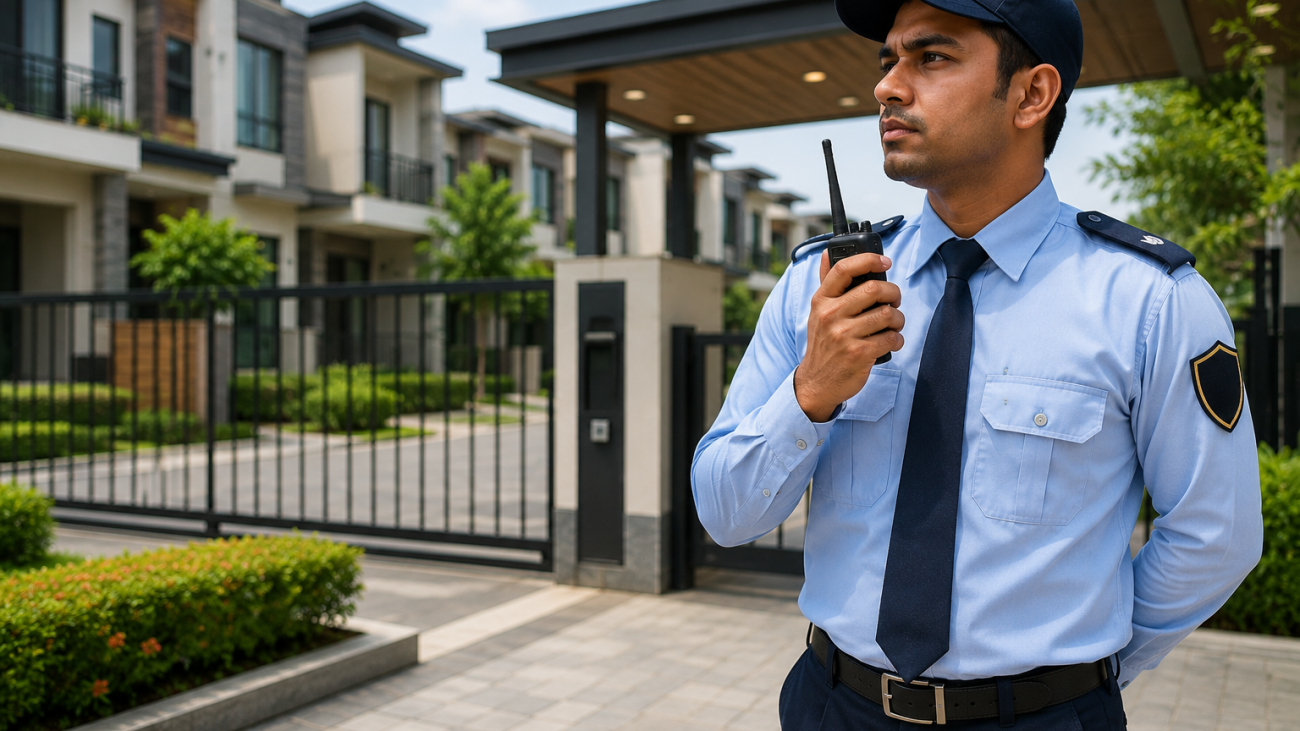
The delivery man states that the house owner had already permitted him to enter the house. The house owner does not answer the telephone call. There are cars forming a line behind him and one more visitor seeking directions, while the passenger is growing increasingly impatient.

Nothing criminal has taken place.

But within the next two minutes, the situation will determine whether it becomes an incident or a security matter.

This kind of ambiguity has to be recognized and managed in public spaces in Malaysia. Malaysia Tourism has recorded 21.2 million foreign visitor arrivals within the first half of 2026, and in 2026, Visit Malaysia showcases more than 300 events across the nation.

Today, with hotels, condominiums, malls, offices, and event venues all receiving strangers, it is essential to be able to deal with them without overlooking any threat or taking any casual disagreement as an attack. This is where an unarmed guard can play an important role in managing routine situations before they become larger security concerns.

Most incidents do not begin dramatically

This aspect of security becomes most visible during a crisis involving robbery, trespassing or assault.

Many different situations arise during a guard’s working day.

Someone enters the premises without a pass. A resident is stalked by another person through an access gate. A customer accidentally enters an employee’s area. An owner refuses to move his/her car from a restricted area.

The first step is to understand the nature of the situation.

The main function of an unarmed but competent guard is to ask basic questions, know all the rules of the site, and not become irritated by the other person’s irritability, embarrassment or anger. An unarmed guard who can communicate clearly can often prevent a routine disagreement from becoming an unnecessary confrontation.

Very often, the situation ends there.

Sometimes, a routine access problem can turn into an altercation, a complaint or something worse.

Communication is part of security training

Such an emphasis on communication does not take away from the importance of professional guarding.

Effective communication is among the academic units of the Certified Security Guard program designed by the Ministry of Home Affairs, the Royal Malaysian Police, and the security services sector in Malaysia. The program also covers Practical 1st Response, 1st Aid, Patrol, Traffic Control and Restricted Areas Control.

As part of its drive to improve the quality of services in the private security sector, KDN has continued mandatory CSG and Trained Nepalese Guard training in 2026.

Training is the foundation. However, the guard still needs to understand how authority operates at that particular location.

The role requires the guard to be able to explain and justify their decisions. This is particularly important for an unarmed guard, whose effectiveness often depends on communication, judgment and knowing when to seek assistance.

The post should define what the guard can decide

Let’s take the delivery/rider case.

Can the guard call the occupant of the house? Can deliveries be held in a designated area? Does the front door remain locked if access cannot be confirmed? What if the tenant can’t be located?

When those rules are not clear, the guard may have to improvise, and a queue can quickly build up.

Businesses deploying an unarmed guard should create straightforward post instructions covering common situations:

  • visitor and contractor access;
  • deliveries and ride-hailing vehicles;
  • restricted areas;
  • lost access cards;
  • aggressive or intoxicated individuals;
  • suspicious activity;
  • medical emergencies;
  • situations requiring a supervisor or police.

The objective is not to script every conversation. It is to give the guard enough authority to make routine decisions while knowing where that authority ends.

De-escalation does not mean giving in

A calm response may sometimes be mistaken for a poor security response.

Effective de-escalation is not about making the situation worse; it is about applying the rules calmly and consistently. The guard makes the boundary clear, explains the alternative, if any, and repeats it if necessary.

When the behavior is a threat or there is imminent danger, the response will be different. The guard is responding according to the emergency procedure and requesting assistance.

This means that clear escalation procedures are crucial for an unarmed guard. The guard should know who can assist in an emergency, when they can contact the manager, and the conditions that would necessitate emergency assistance.

Cameras cannot conduct the conversation

Access control technology and surveillance can help to reduce some of the ambiguity that surrounds a situation.

For example, a system can show the message “access not authorized” or “access card rejected”. However, it usually cannot determine why it happened or encourage cooperation from the affected individual.

This aspect becomes even more important when considering mixed-use buildings and business facilities where there is more than one authorized user and security threats in the same environment.

Good security depends on both technology to provide information and people to interpret the situation. An unarmed guard remains an important part of that process because technology can provide information, while a trained person can assess the circumstances and respond appropriately.

Hire for the post, not simply the uniform

In determining whether to deploy an unarmed guard, the company must first ask the individual what it is that they will do during their shift.

The role of a silent perimeter guard in a warehouse is distinct from the role of a guard in a condominium which has 100 tenants and many deliveries. A hotel lobby is different, since the guard may need to communicate with and persuade visitors.

Therefore, the company should consider communication skills, training, supervision and induction alongside its basic manpower requirements.

The security industry in Malaysia recognizes that guarding involves communication and first response alongside physical security.

This matters because most of the situations that need to be prevented never become emergencies.

It starts with someone at the door telling you, “I have been told I can enter.”

In many such situations, the value of an unarmed guard is not measured by the use of force. It is measured by the ability to recognize ambiguity, communicate clearly, follow the site’s procedures, and know when a situation needs to be escalated.

Residential security guard services

Enhancing Community Safety Through Professional Residential Protection and Preventive Security Solutions

Ensuring safety in modern residential communities has become an important issue. Families demand consistent protection, including protection of physical people, physical property and facilities that reduce stress and increase family peace of mind. Residential security guard services offer trained personnel that will monitor all of the daily activities, which would help to restrict any kind of entry into home, and also answer to some unexpected scenarios in a timely fashion. It makes neighborhoods safer, and helps to create a secure community environment that allows neighborhood residents to easily live their daily lives.

 The importance of Community Safety

People, visitors, service and delivery staff can move in and out of a residential community at all times of the day. In this way, effective security can help maintain order by – observing these activities and ensuring access procedures are carried out uniformly. Strategic security placements deter any wrongdoings and help bring a sense of peace to the community. Good safety practices also help to provide an orderly setting that makes families feel safe during the day and night.

 Access Control Management

One of the most critical roles in a residential community is controlling incoming and outgoing. Security staff cross-check the identities of visitors, track the movement of vehicles, keep records of visitors and only allow approved visitors to come in. But access management will go a long way to reduce the amount of unauthorised access and enhance overall security. Smooth access regimes also facilitate smooth traffic flow without causing undue discomfort to residents or visitors.

 Continuous Patrol Operations

Routine surveillance can detect unusual circumstances early which can be addressed prior to escalating. Security hosts inspections in all common areas, recreation spaces, parking, building entrances and in surrounding perimeters. Regular monitoring provides better visibility and allows for early detection of maintenance concerns, potential activity or safety issues. Ongoing patrolling improves overall protection and helps to keep the neighborhood safe.

 Emergency Response Readiness

When there are unexpected situations, it needs to be taken care of promptly and well co-ordinated. Security staff are trained to deal with emergencies such as fire, medical emergencies, unauthorised access, evacuation procedures etc. During critical moments, having a cool head and communicating effectively reduces confusion. Timely responses minimize potential dangers and ensure residents are safe and emergency management is able to be helped until aid can be supplied.

 Professional Communication Skills

It also means that there is more than just surveillance involved, and that security has to interact with residents, guests, maintenance personnel and service providers on a regular basis. Trusted communication, respect and gracious behavior build trust in home communities. Effective communication too can serve to help solve often utilised issues effectively and efficiently, and ensure a positive resident experience that maintains a secure environment while still being welcoming.

 Technology-Supported Protection

Today there is an increasing use of technology and people trained in security in home settings. Access control devices, surveillance systems, Alarm monitoring, communication and Digital reporting equipment enhances operational efficiency. Technology helps to increase situational awareness and provide quicker response to incidents and proper documentation. The team of trained staff and the latest equipment provides a more comprehensive “armour” of resources for protecting homes.

 Crime Prevention Measures

Preventive security involves trying to decrease potential risks and unwanted events prior to the event. Bright lighting, restricted access, regular checks, visitor checks and patrols ensure crime does not happen and promotes people’s confidence. Residential security guard services play a critical role in prevention by ensuring they’re always watching and seeing what could constitute a bigger security issue among residents or community property.

 Building Resident Confidence

A safe place to live fosters good community relations and increased safety. Effective security helps to foster greater comfort among residents to let children play, join in community events, and share facilities. The security can foster trust that safety and security are always maintained, thereby strengthening the total quality of life in residential areas.

 Continuous Training Standards

Continuous professional development is still important to keep security services of high quality. Continual training improves observation skills, preparedness to and ability to respond in emergency situations, skills in managing conflict, communication and operational know-how. On-going learning equips security professionals with the necessary skills to effectively respond to evolving security needs, while ensuring their continued professional development and competence. The requirement for continuous improvement also means that protective measures continue to be effective over time as residential environments change with the passage of years.

 Conclusion

Overall, reliable residential security guard services are essential for ensuring the safety and security of homes, families, and community assets by actively monitoring, communicating, and preparing for emergencies. A round-the-clock walking beat, gated communites, technology and preventative measures have created a comprehensive residential security solution. Highly trained security staff are able to enforce order and help foster trust and confidence amongst residents. Professional investment in residential security benefits tranquil neighborhoods, enhances community health, and offers families a secure place to live, to go about their daily business and to feel safe and peaceful.

residential security services

Creating Safer Living Environments Through Vigilant Community Protection

In the era of dynamic, dense urban environments, structured protection is a priority in residential neighborhoods. An issue that may arise after safety barriers is lack of attentiveness, which is why there is a need for good supervision that will divert negative incidents before they worsen. Protected systems that are well organised help build trust in the community and enable peaceful neighbourhoods and contribute to community stability. When people are surrounded by contemporary housing, there is ongoing monitoring that continues to influence their ideas around secure and comfortable living conditions.

Neighborhood Watch Presence

The presence of visible supervision often has a significant impact on the perception of safety around a community during various hours. Well-placed protection staff by windows, pathways and communal areas equip all to develop greater awareness of any activity in their vicinity. Regular observations could help to discourage any trespassing and help to maintain an easier day to day service. Hiring residential security guards is becoming common practice among many communities, and it is helping to ensure a comfortable, safe and secure environment for residents.

Access Point Oversight

The stationary nature of residential environments will entail visitors, deliveries and service employees who are constantly moving. To avoid confusion and reduce records of entry and procession, organized entry supervision will be implemented. Well planned gate and visitor checks, plus controlled access procedures help to create a more predictable environment. Good supervision minimizes any unnecessary disruption and promotes increased feelings of order in cooperative living areas.

Evening Patrol Strategies

The wrong person accounting for the needs of children can occur especially at night when things are quieter; and/or there is less visibility. Daily rounds of parking lots, walkways and perimeter areas to uncover sinister situations in advance. At quieter times, a professional presence can discourage those wanting to take advantage, and promote peace of mind amongst residents. The development of a routine patrol plan often contributes to monitoring outcomes that are more effective.

Calm Incident Handling

In residential areas, there is always a situation that can be quite awkward at times that will need a well considered and practical reply. Minor issues, unusual movement patterns or safety concerns may require action to be taken immediately to stop unnecessary escalation. The assistance of trained same-gender protective staff members in observation and communication can often facilitate stable restoration efficiently. Keeping calm during tough times helps keep the peace and reduces any unnecessary tension.

Community Interaction Value

Residential settings often make protective professionals familiar characters and foster accessible and respectful communication. Being able to meet local people in a friendly manner can help to build trust with them and encourage quicker reporting. When everyone knows what each other expects, there is also an increased awareness of safety related practices. The topics about residential security guard jobs are becoming more up to date and are emphasizing the need to go beyond being watchful to being engaged and doing something good for the community.

Supporting Shared Amenities

Typically, residential complexes will have recreation areas, parking areas, gardens or shared amenities that need organisation and formal oversight. These areas can be monitored to help ensure safer use and minimize misuse or unnecessary disturbances. The development of organised observation promotes safe and happy use of common areas by residents and allows sensitive community resources to be maintained and preserved. Focus on accessing areas can improve overall neighborhood satisfaction and consistency of operations.

Emergency Coordination Methods

Good preparative measures are still important components of effective residential protection. Sudden or unanticipated circumstances, like medical issues, home matters, or environmental emergencies, demand swift course of action and sensible judgment. Protective personnel frequently help with communication, access and immediate response until specialized assistance has arrived. Effective coordination in a timely manner bears the order during times of calm and efficient action.

Adapting To Resident Needs

Each home has its own unique needs, due to its design, population and location. Flexible protective procedures are helpful to meet differing expectations without disrupting routines. Individualised care/supervision arrangements can offer an enhanced ability to care well and provide operational efficiencies. Today communities are increasingly weighing occurrences of adaptability, attentiveness and practical response to changing circumstances for residential security guard services.

Conclusion    

Household living arrangements remain having an impact on the community attitude towards safety and supervision. Protective needs are changes as a result of expanding residential areas, greater activity of visitors and higher demands for security. Built-in checks, accountability, and oversight are still important aspects of providing safe environments. Tactful planning and reliable protective measures in line with the community’s wellbeing helps to result in long-term residential stability.

security guard services

Modern Security Services in Malaysia: Complete Guide for Businesses in 2026

In recent years, there have been rising security issues within Malaysian organizations, especially those located in rapidly growing regions like Selangor and Klang. With the increasing levels of population density, urbanisation, and industrialisation, there have been cases of crimes such as robbery, trespassing, and vandalism that have become much more common. Modern security solutions in Malaysia, including security services in Malaysia, are not solely based on the deployment of guards.  Instead, it is a combination of trained manpower, the use of technology, and risk management. In this case, you will learn about modern security solutions, their importance to businesses in 2026, and choosing the right partner for protection.

Understanding Modern Security Needs

Basic guard services are practised by many companies, but they think it is enough for them. However, this practice often results in vulnerabilities in monitoring, response, and prevention of incidents. The combination of the workforce with CCTV monitoring, access control, and live report generation is among the features offered by today’s security services in Malaysia. Without this, companies are likely to face delays in response and less visibility regarding potential hazards. Professional security services overcome this challenge by combining human and technological resources to provide continuous monitoring and decision-making processes.

Why Businesses Are More Vulnerable Today

The development of industrial zones in Selangor and Klang has increased the vulnerability as well as the exposure of businesses operating there. The threat to warehouses, offices and retail spaces is now more than a threat posed by exterior attacks, but a threat posed by internal attacks. Absence of proper security arrangements can result in loss of money, disruption of activities, and tarnishing of reputation of the company.  Malaysia has reliable security services, which are used to counter these risks through the installation of several security layers, including patrol and surveillance systems.

Beyond Cameras and Alarms

Technology has proven itself to be an essential part of proper security. However, having cameras installed without testing the whole process would only limit the efficiency of the cameras. There are professional security firms in Malaysia that assure active management of technology. The CCTV cameras are watched in real-time, the access control system is well set, and the incidents are recorded in an orderly manner. This eliminates any blind spots and also guarantees that the threats are identified before they become serious.

Skill Matters More Than Presence

Not all security guards offer the same level of security. The inexperienced team may fail to identify the hazards that can arise or may not know how to handle emergencies appropriately. Well-trained security services in Malaysia invest in lifelong training, which includes surveillance methods, emergency response, and communication procedures. This not only guarantees the presence of guards but also their ability to effectively deal with real-world situations, helping reduce the risk of costly incidents.

One Size Does Not Fit All

All businesses have different modes of operation, and security requirements also differ depending on the nature of the property and risk. A retail shop would adopt one approach compared to a factory.

Security plans for Malaysia are developed by security service providers who conduct risk assessments. The strategy that is tailored to the company’s specific needs ensures that resources are allocated effectively and addresses all the vulnerabilities, rather than adopting a generic approach.

Why Licensing and Compliance Matter in Malaysia

The regulation of security activities in Malaysia follows strict policies outlined in the Agency Act 1971. The use of a licensed security provider is not only a legal obligation but also a crucial aspect of professionalization and responsibility. Companies licensed to provide security services in Malaysia have to meet the required standards set forth by the government, have trained staff members, and observe certain guidelines on how the work should be done. This helps ensure consistency, reliability, and honesty in the security sector. Working with a licensed company builds trust, as it follows Malaysia’s laws and regulations.

How to Choose the Right Security Company in Selangor

  • Ask if they have licenses and adhere to Malaysian regulations.
  • Find those with experience working on similar sites.
  • Check for training and supervision of the guards.
  • Choose firms that employ CCTV and advanced technology for security.
  • Check if they offer good reporting and comprehensive reports.

They may also provide K9 Security Services, Armed Guard Services, and CCTV Monitoring to ensure better security.

FAQ

What types of businesses need security services the most?
 Any business handling assets, customers, or sensitive information requires protection, especially in high-traffic or industrial areas.

Can security services operate 24/7?
 Yes. Most professional providers offer round-the-clock monitoring and guard deployment.

Can security services be customised for my business?
 Yes. Reliable providers assess your risks and design solutions tailored to your operations.

Do I still need guards if I already have CCTV?
Yes, CCTV cameras will only record events that happen. However, guards can help in preventing the problem.

Is hiring a security company expensive?
This depends on the case at hand, but good security is a way of saving more money later.

Can small businesses hire security services?
Yes, small firms sometimes need protection just like big companies.

How quickly can security be deployed?
 Deployment timelines depend on requirements, but many companies can arrange services within a short timeframe after assessment.

Do security companies provide reports on incidents?
 Yes. Professional services include detailed reporting and documentation for transparency and tracking.

Are trained guards really important?
 Yes, trained guards are faster in responding to problems and handling issues securely.

Conclusion

Today, security does not only concern the reaction to some event but is aimed at its prevention. Due to the continuous increase in the number of businesses in Malaysia, professional and technology-oriented protection becomes very important.

Security services in Malaysia today are not just the presence of a person but a full system in regard to property protection, personal protection, and operational security. Knowing the key features of effective security and choosing a reliable partner, a company can freely develop.

security guard company

This Is How Businesses Lose Everything Overnight

Most businesses think that the loss is gradual, i.e., the loss of revenue, an increase in cost or competition. In fact, the worst cases are happening during the night.  One security breach, internal theft, or operational lapse is all it takes to sweep assets, operations, and reputation out of existence in an instant. This is where the involvement of an efficient security company in Malaysia will be critical. Retail, logistics, manufacturing, and office businesses are all at risk, and this is not taken seriously unless something major happens.

The Real Risks Businesses Overlook

The security risks are not limited to breaking in. Current businesses face both physical and operational risks, which can emerge at any time.

High-impact risks are common, and they include:

  • Breaking of premises after working hours.
  •  Employee theft or employee misconduct.
  •  Theft of items in the warehouse.
  •  Arson or deliberate attacks.
  •  Absence of monitoring in security areas.

Most of these problems are never detected on a real-time basis. When they are finally found, the damage to the finances and operations has already taken place.

Why Losses Happen So Quickly

The reason businesses lose assets is usually due to gaps in monitoring and response.

The majority of the incidents happen because of:

  • The absence of vigilant systems.
  •  None of the trained personnel is available on-site during vulnerable hours.
  •  Inability to respond to alarms or suspicious activity in good time.
  •  Excessive use of the simple CCTV that does not involve real-time monitoring.

The absence of a formal security infrastructure will transform a security breach into a loss of billions of dollars in a few hours. The reason businesses lose assets is usually due to gaps in monitoring and response. This is the reason why companies are increasingly engaging a security firm in Malaysia that will provide both the manpower and technology-based solutions.

How a Security Company in Malaysia Reduces Risk

Professional security providers are concerned with prevention, detection, and response.  They do not respond to the incident; they design the system in such a way that the chances of the incident happening are reduced to a minimum.

An average security solution consists of:

  • Access control and patrol security guards on site.
  •  Surveillance on CCTV with surveillance assistance.
  •  Alarm systems with the quick response teams.
  •  Tracking of employees and visitors into and out of the premises.

More sophisticated systems can also be installed with remote surveillance and audit of risk assessment to identify the weak areas in the operations. For companies with late working hours or handling high-priced inventory, security services are not just an option but a necessity.

Evaluating Your Current Security Setup

Businesses have to assess their weaknesses before contracting a provider. This will help determine whether the existing controls are sufficient or not.

The main questions to be asked include:

  • Are there appropriate exit and entry points with monitoring?
  • Does it have a real-time response mechanism?
  • Are the existing controls consistent throughout the shifts?
  • Does it have monitoring of internal access and movement?

If the answer to any of these questions is not clear, then it is an indication that there is a weakness to be addressed urgently. The first step by a professional security company in Malaysia is to conduct a site assessment to address these issues systematically.

Frequently Asked Questions

Do small businesses need professional security services?
Yes. This is because they are more vulnerable since they have fewer monitoring mechanisms.

Is CCTV alone enough to prevent losses?
No. CCTV cameras will help in detecting losses but not in preventing them.

How quickly can security risks be addressed?
By the appropriate arrangement, the risks can be managed in real-time, which will save a lot of possible losses.

Conclusion

Companies rarely face total risk, but at night, they can lose everything. Physical and operational security failures may arise suddenly and produce an irreparable impact. Rarest are the instances when everything a company has will be at stake one day and, most importantly, will lose everything the following day. Collaborating with a trusted security company in Malaysia will help the business to shift from reactive protection to risk proactivity. With the presence of appropriate systems, one will be able to identify the risks at the right time and take preventive measures before they escalate.

event security

Hosting an Event? This One Event Security Mistake Can Ruin Everything

There are different parts in planning an event, including venue selection, guest management, logistics, and vendor coordination.  Despite this, event security is one of the areas that is not taken seriously. Event security is not a planning aspect; it is just something to tick off at the last minute for event planners in Malaysia. This one error can lead to the interruption of the event, damage to reputation, and even safety hazards. Regardless of a corporate event, local celebration, or a personal party, without proper planning of the event security, months of preparation may be ruined in a few minutes.

The Most Common Mistake: Treating Security as an Add-On

The biggest problem, however, is not the lack of security. The biggest problem is the lack of planning. Most event organisers believe that having a few guards around the access points is sufficient. As a matter of fact, event security includes risk identification, a crowd management plan, access control, and an emergency response plan. The risks associated with the event in Malaysia vary because the event will involve a large-scale exhibition and community events. For instance, the number of people attending the event, the presence of VIPs, the open nature of the event, and the local laws all play a factor in determining the extent of necessary security.

Even a well-organized event may encounter:

  • Unauthorized access or overcrowding.
  •  Delays at checkpoints
  •  Lack of coordination in case of an emergency
  •  Inadequate response to incidents

How to Plan Event Security Properly

Good event security starts early in the planning stage and not just a few days before the event.

1. Conduct a basic risk assessment

Possible risks must be determined depending on the size of the events, the location, and the audience. A community outdoor event will be of less concern than a company indoor seminar.

2. Define access control points

Create exit and plan routes. How the attendees, employees, and vendors would be verified must be considered. This may be done by using digital passes, wristbands or ID checks.

3. Plan for crowd management

Know actual entry and flow rates within the venue. The position of security personnel must be assigned in areas of high congestion and not just at the entrances.

4. Prepare for emergencies

Have clear protocols for medical incidents, fire hazards, or unexpected disruptions. Identify the routes for escaping the event in case of an emergency.

5. Coordinate with local authorities

In bigger events in Malaysia, coordination with the local councils or the police may be needed. This ensures it is aligned and will help in responding faster in case of an emergency.

How Organisers Should Evaluate Security Needs

However, not all events require the same measure of security, but all events require planning.

In assessing your event security arrangement, consider:

  • Size and anticipated footfall of an event.
  •  Type of venue (open or enclosed)
  •  Guest list, involving VIPs or public guests.
  •  Duration and timing of the event
  •  City or state regulatory requirements.

Before the event, professional event security providers in Malaysia offer consultation on the above factors.

Frequently Asked Questions

Do small events really need event security?
Yes. Basic access control and emergency planning can be useful even for small groups.

How early should security planning begin?
Ideally, in the first phase of event planning, along with venue and logistics planning.

Is hiring guards enough?
No. While event security guards are an essential part of event security, planning, coordination, and risk assessment are also significant factors.

Conclusion

Event planning deals with different kinds of factors, and one of the most important is security. The second major blunder is the tendency to view event security as a second thought.  A well-organised methodology, from risk assessment to coordinated performance, will ensure that your event takes place in a well-organised manner. For event planners in Malaysia, event security is more than just a precaution; it is a key part of the planning process. It is a business necessity to provide a managed and dependable event experience.

event security

Event Security Ensuring Safety Control And Smooth Event Execution

Security of events is an important aspect of planning and managing any public and private events of any magnitude. Concerts, conferences, exhibitions, festivals, and corporate functions are events where large numbers of people come together, they have goods of high worth, and the logistics are usually complicated. Event security aims to secure the safety of the participants, employees, entertainers, and facilities as well as ensuring order and law. A structured security strategy creates a secure situation and enables the events to run smoothly.

Significance Of Organized Security Planning.

Basically, successful event security commences with good planning and risk assessment. The challenges in each event are unique depending on the size of the venue, profile of the audience, time and activities. Security planning tries to establish the possible risks like over-crowding, unauthorized access or in case of an emergency. Preplanning enables security teams to use resources effectively, minimize weaknesses and improve safety, as a whole.

Flow Control And Management of Crowds.

Among the most significant roles in the area of event security is the need to control crowds. Big crowds need to be transported in order to avoid overcrowding, stampede, and mishaps. The queues, points of entry, exit, and densely populated areas are controlled by security personnel. The management of crowd flow is beneficial to the comfort and safety of the crowd in addition to ensuring that there is adherence to the capacity limits and regulations of the venue.

Access Control and Entry management.

Access control is necessary to control access to authorized people only. Ticket verification, credentials, and identification are performed by event security teams at specific checkpoints. There needs to be extra security measures in restricted zones including backstage zones, technical and VIP sections. Good access management can prevent an intrusion of gatecrashing and protect sensitive areas in the course of the event.

Their Responsibility as Certified Event Security Staff.

The main workforce behind the security operations in events is provided by trained security personnel. They are responsible to monitor activities, spot suspicious behavior and apply rules of events. The training is centered towards observation, communication and skills in conflict management. Professional conduct makes sure that no issues are dealt with aggressively and with efficiency in a secure but friendly environment.

EPRC Emergency Preparedness And Response Capability.

Event security is an important concern and emergency readiness is one of it. Examples of scenarios that security teams train include medical emergencies, fire hazards or sudden disturbances. Emergency plans entail evacuation routes, reunion spots and mobilisation processes. Quick and coordinated response will reduce the damage and bring order in a critical situation to save lives and property.

Securing Event Assets and Infrastructure.

Some of the events that are covered under this include sound systems, lighting, staging, digital installations among others. Event security guards ensure that these assets are not stolen or vandalized, or damaged by accident. Storage areas and technical zones are supervised by security personnel. Asset protection will guarantee smooth operations and minimise financial and operational losses.

Communication With Event Managers and Employees.

Organization of effective security of the event must closely coordinate with the organizers, staff in the venue, and technical teams. Effective communication will guarantee that security is in line with event time and events. With greater coordination, the decisions are made faster and when circumstances change, greater responsiveness is maintained. Close cooperation improves situational understanding and general control of the event.

Application Of Technologies In Event Security Incident.

The role of technology in the security of events is becoming more significant. The visibility and coordination are enhanced by surveillance cameras, communication equipment, and control access systems. Real-time monitoring enables security teams to be aware of problems on time. The combination of technology and on-ground staff will produce a multi-level security solution, which will increase the reliability and efficiency of responses.

Controlling Behavioral And Alcohol Related Risk.

The situation is also more problematic when it comes to alcohol consumption or high-energy activities. The security staffs of the event check behaviours, to ensure that there is no chaotic behaviour and disputes. Early intervention and de-escalation methods are used to ensure the safety of the environment. Behavioral risks management safeguards the attendees and maintains the reputation of the event.

Adherence To Safety Rules and Standards.

Security services in events have to be in accordance with local safety standards and venue specifications. Both the occupancy restrictions, emergency exit access, and restricted areas contribute to decreased liability. Compliance will mean that the event has fulfilled legal and safety standards to safeguard both the organizers and the participants.

Summary On the Significance of Event Security.

During events of all sizes, it is important to have event security as a method of ensuring the safety of people, property and processes. Security measures are used as a means of keeping events safe and organized through proper planning, trained personnel, crowd management and emergency preparedness. Professional event security is an important part of responsible and successful event management as events keep on increasing in scale and complexity.

security guard training

Security Guard Training Building Professional Skills For Effective Protection

Security guard training is one of the prerequisites of providing credible and professional protection services under different settings. With the ongoing change of safety risks, this implies that with trained security personnel in place, order is maintained, incidents are prevented, and management of emergency situations is effectively done. Training of security guards aims at instilling discipline, awareness of situations and competence of their operations. The well-organized training programs will make sure that the guards are ready to guard people, property, and other assets with confidence and professionalism.

The relevance of appropriate training in security services.

The quality of the training of guards is very important in professional security operations. The security guard training provides the personnel with the knowledge that is needed to detect risks and follow the right procedures. The trained guards will be capable of dealing with difficult situations in a lawful manner. Eliminating mistakes and promoting safer outcomes as well as developing trust in clients, employees, and the population requires proper training.

Essential Goals of Security Guard Training.

The main purpose of security guard training is to equip an individual to work in the real-life security duties. Prevention, observation, and controlled response are all focused on in training. Guards are trained to evaluate threats, control access points and exercise vigilance when patrolling. Such objectives provide uniform performance and sound protection on various security missions.

Moral Development and Physical Fitness.

Security guard training includes physical preparation. Guards are also trained to be in good fitness to stand, walk, and act on incidents during long hours. Training on discipline enhances alertness, punctuality and professionalism. Physical conditioning promotes stamina and preparedness, which help guards to execute their responsibilities well in harsh conditions.

Training of Observation and Surveillance Skills.

Training of security guards emphasizes much on observational skills. Guards are conditioned to observe abnormal behavior, changes of the environment and the security weakness. The surveillance methods can be used to detect possible threats even before they happen. Well-developed observational skills will maximize situational awareness and help with early intervention in order to decrease security risks by a significant margin.

Procedures: Access Control And Patrol.

Security guard training involves access control which is a very important duty. Guards are trained on how to check the identification, visitor entry, and restricted access. Patrol training involves route plans, reporting and regular coverage of areas. Good access control and patrol practices will ensure order and discourage unauthorized activities.

Crisis management and Emergency Response Training.

Security guard training is also designed to include emergency training in the event of fire, medical emergency and security outbursts. The guards are trained to conduct in case of emergency guidelines, assist in evacuations, and communicate with emergency services. Crisis management training focuses on making a decision when there is pressure. The proper emergency action saves lives and reduces damages in case of emergency.

Communication and Conflict management skills.

Security operations must be clearly communicated. Security guard training enhances both verbal and non-verbal communication skills that are needed to relate with the people, workmates, and the authority. The training on conflict management is devoted to de-escalation and professional activity. These competences assist in solving conflicts amicably without loss of power and control.

Training in Legal Ethics and Awareness.

Knowledge of legal limits is also a significant point of security guard training. The guards are trained about the laws, regulations, and rights in connection with security responsibilities. In the training of ethical conduct, the main focus is on responsible exercise of power and respect of privacy. Security operations are secure and trustworthy because of the legal and ethical awareness.

Modern training on security training using technology.

In contemporary security guard training, they are exposed to security equipment like CCTV equipment, access control equipment and alarm systems. Guards are taught to support and act upon technology based notices. Knowledge of technology will increase the efficiency of coordination and overall security in the monitored places.

Reporting and Documentation Skills.

Reporting is an essential security operation. Security guard training instills good documentation of occurrences, patrol logs and observations. Effective investigations and responsibility are backed by clear reports. Good reporting will provide continuity and transparency in management of security.

Inference On the significance of Security Guard Training.

Security guard training is a training that is needed to produce good, disciplined and dependable security guards. Training programs make the guards to be responsible in their duties through physical conditioning, skill development, legal awareness and emergency preparedness. The security guard training has been a significant investment in effective protection and risk management as security issues keep on changing.Security guard training is one of the prerequisites of providing credible and professional protection services under different settings. With the ongoing change of safety risks, this implies that with trained security personnel in place, order is maintained, incidents are prevented, and management of emergency situations is effectively done. Training of security guards aims at instilling discipline, awareness of situations and competence of their operations. The well-organized training programs will make sure that the guards are ready to guard people, property, and other assets with confidence and professionalism.

The relevance of appropriate training in security services.

The quality of the training of guards is very important in professional security operations. The security guard training provides the personnel with the knowledge that is needed to detect risks and follow the right procedures. The trained guards will be capable of dealing with difficult situations in a lawful manner. Eliminating mistakes and promoting safer outcomes as well as developing trust in clients, employees, and the population requires proper training.

Essential Goals of Security Guard Training.

The main purpose of security guard training is to equip an individual to work in the real-life security duties. Prevention, observation, and controlled response are all focused on in training. Guards are trained to evaluate threats, control access points and exercise vigilance when patrolling. Such objectives provide uniform performance and sound protection on various security missions.

Moral Development and Physical Fitness.

Security guard training includes physical preparation. Guards are also trained to be in good fitness to stand, walk, and act on incidents during long hours. Training on discipline enhances alertness, punctuality and professionalism. Physical conditioning promotes stamina and preparedness, which help guards to execute their responsibilities well in harsh conditions.

Training of Observation and Surveillance Skills.

Training of security guards emphasizes much on observational skills. Guards are conditioned to observe abnormal behavior, changes of the environment and the security weakness. The surveillance methods can be used to detect possible threats even before they happen. Well-developed observational skills will maximize situational awareness and help with early intervention in order to decrease security risks by a significant margin.

Procedures: Access Control And Patrol.

Security guard training involves access control which is a very important duty. Guards are trained on how to check the identification, visitor entry, and restricted access. Patrol training involves route plans, reporting and regular coverage of areas. Good access control and patrol practices will ensure order and discourage unauthorized activities.

Crisis management and Emergency Response Training.

Security guard training is also designed to include emergency training in the event of fire, medical emergency and security outbursts. The guards are trained to conduct in case of emergency guidelines, assist in evacuations, and communicate with emergency services. Crisis management training focuses on making a decision when there is pressure. The proper emergency action saves lives and reduces damages in case of emergency.

Communication and Conflict management skills.

Security operations must be clearly communicated. Security guard training enhances both verbal and non-verbal communication skills that are needed to relate with the people, workmates, and the authority. The training on conflict management is devoted to de-escalation and professional activity. These competences assist in solving conflicts amicably without loss of power and control.

Training in Legal Ethics and Awareness.

Knowledge of legal limits is also a significant point of security guard training. The guards are trained about the laws, regulations, and rights in connection with security responsibilities. In the training of ethical conduct, the main focus is on responsible exercise of power and respect of privacy. Security operations are secure and trustworthy because of the legal and ethical awareness.

Modern training on security training using technology.

In contemporary security guard training, they are exposed to security equipment like CCTV equipment, access control equipment and alarm systems. Guards are taught to support and act upon technology based notices. Knowledge of technology will increase the efficiency of coordination and overall security in the monitored places.

Reporting and Documentation Skills.

Reporting is an essential security operation. Security guard training instills good documentation of occurrences, patrol logs and observations. Effective investigations and responsibility are backed by clear reports. Good reporting will provide continuity and transparency in management of security.

Inference On the significance of Security Guard Training.

Security guard training is a training that is needed to produce good, disciplined and dependable security guards. Training programs make the guards to be responsible in their duties through physical conditioning, skill development, legal awareness and emergency preparedness. The security guard training has been a significant investment in effective protection and risk management as security issues keep on changing.

security guard providers

Professional Security Guard Providers Enhancing Safety Across Modern Environments Globally

The need to have safeguarded infrastructure, commercial zones, and residential construction continues to grow to provide safety and continuity. Professional guarding services have developed much more than the traditional watchkeeping; it is now incorporated with training, technology, and the risk awareness in the day to day activities. In this landscape, security guard providers are very essential in ensuring order, avoiding loss, and assisting in emergency preparedness. This paper discusses the way in which these services operate, why they are still in high demand and how organized guarding services can help enhance safety over the long term in any environment.

Increasing Demand of Structured Protection Services.

The growth of urban centers, sophisticated infrastructure, and the increased level of contact with people have made the expectations of safety much more advanced. Given the increased diversification of risks, more and more use has been made of informal monitoring techniques. Midway through this change, security guard vendors bring trained individuals who can perform access control, crowd management, and incident reporting. Such services also serve the office, residential complexes, industrial locations and social areas by having a steady vigilance that is in tandem with contemporary safety rules.

Professional Standards of Training and Skill Development.

Good guarding is based on well-organized training and training of the skills. Employees are usually taught methods in surveillance, response to emergencies, communication guidelines, and de-escalation of conflict. In the everyday operation, security guard providers focus on discipline, situational familiarity and focus on the working procedures. This practice will help business professionals to make guards an active safety asset, not a passive onlookers, and ensure that the trust of all the stakeholders is improved and improve the overall performance of the security of the site.

Technology Enhancement in Guarding.

The development of monitoring tools has changed the way protection services are performed. The efficiency is increased by digital reporting systems, scanners of access, a surveillance instance, and real-time communication devices. They are embedded in the systems and security guard providers utilize technology to enhance response times and accuracy in documentation. Trained staff combined with smart tools is a layer of protection, which eliminates vulnerabilities and contributes to safety enhancements that are data-driven across facilities of different sizes and complexity.

Individualized Solutions To various settings.

There is no place that has the same security requirements. Depending on the level of foot traffic, the value of assets, the hours of operation, and the surrounding, the level of risks differs. To cope with this, security guard companies develop specific deployment plans, changing the number of personnel, rotations, and area of responsibility. This type of customization guarantees protection services to be consistent with operational requirements, such as deterrence, surveillance, visitor support, or emergency response in controlled settings.

Regulatory Alignment And Compliance.

Compliance with the regulation is one of the most significant issues of professional guarding services. Accountability and ethical behavior is provided through licensing, background checks and operational standards. During the compliance procedures, security guard providers have documentation, training documentation and procedural audits to satisfy legal expectations. Formalized strategy eliminates the liability risk and makes sure that working personnel act within the controlled legal and professional scope, which enhances the trust in outsourced safety measures.

Role In Preparedness and Response in Emergencies.

The planning of preparedness is one of the fundamental tasks of the contemporary guarding services. During an emergency, the first people who come across involve guards in fire alerts, medical or unauthorized access. In the events of this nature, security guard providers would make sure that its personnel adhere to a set protocol, will arrange and oversee evacuations, as well as coordinate with the response teams. This preparedness largely mitigates mayhem, curtails harm, and aids prompt rehabilitation after unpredictable accidents.

Increasing Trust And Operational Continuity.

The presence of security is visible and it adds to the perceived level of safety and operational stability. It can be observed that employees, residents, and visitors are responsive to planned protection efforts. Security guard providers aid in controlling disorganized settings, deterring bad behavior, and assisting continuous activities in their day to day activities. This continuity instills confidence and business and communities can operate without worrying about security breakages that can be averted.

Conclusion

The development of professional guarding is the reflection of shifting risk situations and increased demands in the sphere of safety management. By means of professional staff, integration of technology, compliance with regulations, and a customized implementation, security guard companies can offer full-scale protection solutions. These services are not limited to deterrence and assist preparations, continuity and trust in various settings. Structured guarding services have always been one of the cornerstones of attaining sustainable and dependable security results as safety concerns continue to become increasingly complex.