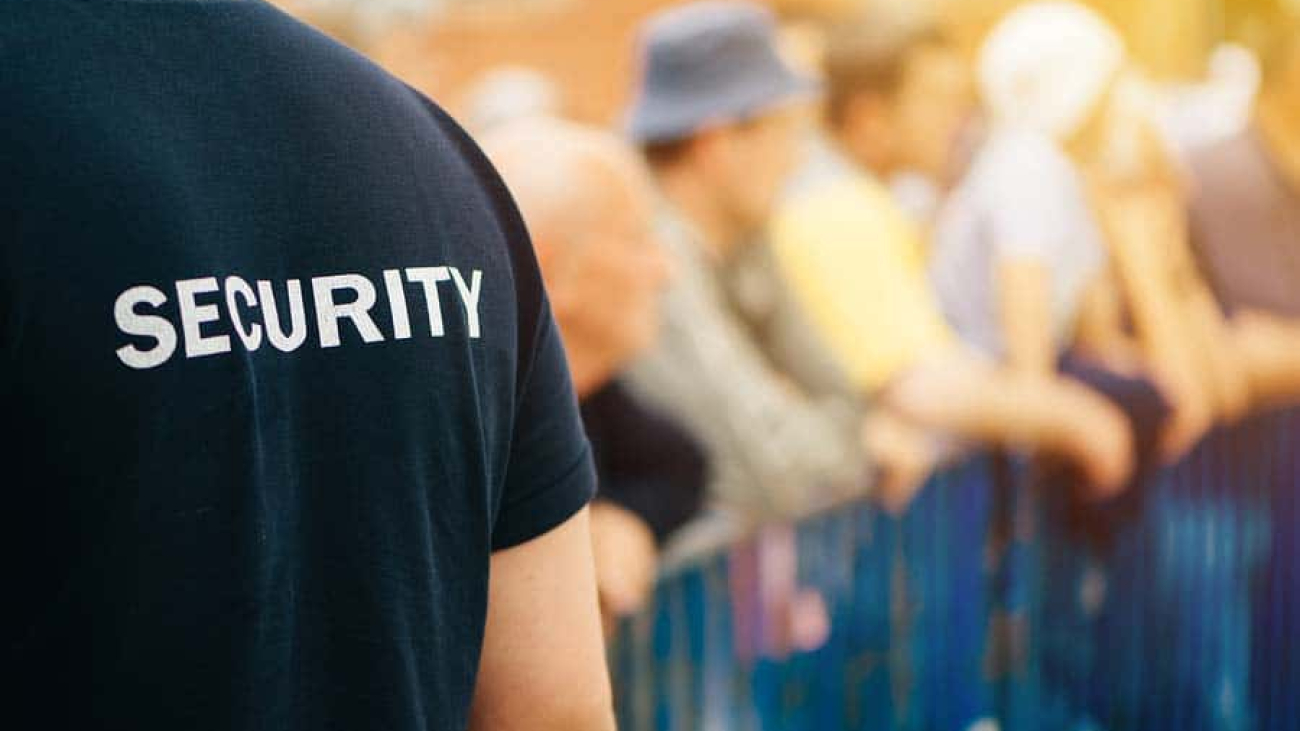
private security companies

Exploring the Role and Functions of Private Security Companies in Modern Society

The importance of such a kind of safety and protection in this modern era has brought out the need for private security companies these days. These are independent from the government controlled forces and carry out protective service to individuals, businesses and institutions. Private security companies have risen to fill the void with increasing concerns of terrorism, crime and cyber threats in both the public and private sectors. Far from traditional guarding duties, their functions have expanded well.

Offering Protection Services to Residential and Commercial Properties

Sometimes private security companies are hired to protect residential, commercial buildings, industrial sites, and retail outlets, and all the above. And they prevent theft and vandalism, and unauthorized access. The presence of security personnel with a visible, proactive approach aimed at monitoring surveillance equipment, routine patrols, and managing visit access discourages criminal behavior. These services are important, especially in high crime areas when state security resources are overstretched or underfunded.

Supporting Event Security and Crowd Management Strategies

In events open to the public, concerts, festivals, sports, private security companies are responsible to guard the public from dangers and risks. Crowd control, checking of tickets and inspections of bags, as well as attendance to emergencies are the duties of them. Staff are trained to make sure that entrances and exits are secure, disruptions are quickly dealt with. Their input reduces the workload on police forces and facilitates the smoother handling of large-scale events without the occurrence of disorder or the injury.

Guarding VIPs, Celebrities, and High-Risk Individuals with Discretion

Another really important area in which private security companies provide services is executive protection, also known as bodyguard services. They are trained to detect threats, determine safe routes, and respond to any risk it may face high-profile people. Security teams are discreet and provide strong physical protection for the political figures, corporate executives and celebrities. It is usually a blending of physical presence and strategic planning, and such a service.

Crime Prevention Through Surveillance and Intelligence Gathering.

Today modern private security firms are using advanced technology like CCTV systems, motion detectors and cybersecurity tools. With these technologies, it is possible to monitor in real time, and to report incidents. If regular staff are not caught, they don’t feature in the training of security staff to spot suspicious behaviour and communicate with local police if required. Presence of surveillance also helps in deterring crime and also aids in investigations and strengthens the security mesh of a place.

Retail and shopping environment security enhancement

There are times when the shoplifting and fraud as well as the violent incidents that occur in retail environments find themselves depending on private security. In stores, plain or uniformed officers patrol the store and speak to customers to keep the shopping atmosphere safe. Conflict or emergency is also handled calmly by the security personnel. Their presence boosts customer confidence, curbs financial loss and keeps the retail staff more in service mode.

Providing Security Solutions to Educational Institutions and Campuses

Learning needs a secure environment, which includes schools, colleges and universities. Campus patrols of private security companies are provided, entry monitoring, and emergency preparedness training are performed by private security companies. They provide this role by shielding facilities from access by unauthorized people, and if there is any incident of violence, theft, or bullying, they will respond. School administrators work with security officers in order to establish an atmosphere that’s protective of a safe learning environment and to ensure the implementation of safety drills.

Adapting to the Secure Operational Role in Connecting Technology Innovation

Due to their increasing reliance on digital infrastructure, private security providers, especially, are adopting integrated security systems. Some of these may be biometric access controls, drones for surveillance, real time data sharing platforms, etc. Such technologies also improve efficiency, decrease the time response, and improve coordination with other security stakeholders. Today, physical and digital threats are now part of the training programs that are aimed at both physical and digital threat responses, which demonstrates the transition into the hybrid security models.

Conclusion: Evolving Role and Value of Private Security Services Today

Guard services are no longer the only service being provided by private security companies but multi companies that specialize in providing customized security solutions to different sectors. This demonstrates the expansion of society’s necessity of specialty safety precautions. These companies are doing a lot of work for keeping peace and security by safeguarding private property, managing crowds and responding to emergencies. As risks proliferate, private security will continue to serve as an important support system to public law enforcement.

central monitoring system

The Benefits and Principles of Remote Surveillance

There has been a need to invent new monitoring solutions for security concerns. Remote surveillance is an advanced method of safeguarding assets, personnel, and property. A good security operations management system has to rely on a central monitoring system. Understanding the benefits and principles of a central monitoring system & remote surveillance will assist in taking informed decisions in security infrastructure.

The Concept of Remote Surveillance

Remote surveillance suggests the use of technology to monitor places from a remote control center. This system is comprised of cameras and sensors, & communication networks, and allows real-time security updates. Advanced analytics allow for a deeper level of monitoring, whereby the detected anomalies will set off an alert when it sees abnormal activity. A well-organized central monitoring system allows for an easy and extensive surveillance.

Key Benefits of Remote Surveillance

  • Enhanced Security and Threat Prevention

One of the roles played by remote surveillance is to serve as a deterrent against unauthorized activities. The real-time monitoring makes it possible to intervene immediately, while visible cameras stop potential intruders. A central monitoring system guarantees that security officers get the instant alerts in time.

  • 24/7 Monitoring and Real-Time Response

Remote surveillance is far different, it doesn’t work in the traditional mode. The flow of data continues as a real-time threat detection. Instant alerts are triggered any time there is suspicious activity, reducing response time and cutting down on risks.

  • Cost-Effective Security Management

The deployment of remote surveillance lessens the requirements for on-site security. Human intervention is eliminated and with it the cost savings. A central security system consolidates computer resources, and helps lower operational costs and optimizes efficiency.

  • Scalability and Flexibility

Scaling of remote surveillance systems for expanding security requirements is easily done. It can easily be integrated with additional cameras and sensors without disrupting other parts of the infrastructure. It provides this flexibility in the sense that the security coverage can adapt to the changes in requirements.

  • Data Storage and Analysis

Modern surveillance systems take video and capture it, online. Storing the data in the cloud makes it easy to access it for investigation. The video analytics provide a central monitoring system with deep insights of the events and assets to assist in security assessments and operations improvements.

  • Legal Compliance and Accountability

By the supervision system, the organizations comply with the industry regulations. However, video evidence is held, which can be used to account for disputes, internal investigations, or any legal proceedings. It documents the security event for the sake of transparency and adhering to legal standards.

  • Business Continuity and Disaster Recovery

Remote surveillance is an additional improver of resilience, specifically to business continuity plans due to disruptions. The surveillance data helps the organizations to respond to incidents in terms of damage assessment and a recovery strategy. Continuity is ensured with the help of a well-constructed central monitoring system that maintains security standards during crises.

Principles of Remote Surveillance

  • Proactive Monitoring Approach

The first step is to identify security threats that may escalate. Proactive monitoring principle is a guarantee that potential risks are spotted early and preventive measures are promptly taken.

  • High-Resolution Imaging and Clarity

Threat detection is made clear and detailed via video footage. The advancement in the placement of high-definition cameras helps to clearly capture any movement accurately for security analysis.

  • Automation and Artificial Intelligence

AI-driven analytics is being used in modern surveillance solutions to detect any suspicious activities. Efficiency of the job is increased with automated alerts and pattern recognition.

  • Remote Accessibility and Control

Surveillance feeds should be for authorized personnel to access from any location. This ties security teams into cloud-based systems and mobile applications that keep security teams connected and reactive.

The Role of a Central Monitoring System in Remote Surveillance

Remote surveillance operations have a backbone, which is a central monitoring system. It merges them onto a single unified platform that can receive, monitor, analyze, & respond in real time. The coordination between security teams is enhanced in the process and the efficiency of incident management increases. 

Conclusion

Remote surveillance has changed security into a classification that comprises real-time viewing, wrongful detection, and automatic response mechanisms. A central monitoring system integration improves security management and offers fully rolled-out security and seamless operations. With adherence to certain principles, an organizational surveillance framework can be robust by ensuring safety, compliance, and operational efficiency. With the progression of technology, intelligent surveillance solutions will only continue to allow the security infrastructure to be enhanced with the leverage of such solutions, implemented in the proactive approach for risk mitigation and incident response.

private investigator Malaysia

Standard Operating Procedures (SOP) of a Private Investigator in Malaysia

It is important to know that private investigators serve to provide intelligence, conduct surveillance, and discover hidden truths. The profession consists of knowing a lot and behaving correctly in terms of legal frameworks and doing so is required of others in the profession. A Standard Operating Procedure (SOP) in Malaysia has a well-defined way that ensures that every private investigator Malaysia handles affairs well.

  • Case Assessment and Client Consultation

A private investigator Malaysia will first assess the case in detail before taking any case. The case must be evaluated concerning nature, scope, and legal implications. However, a consultation brings in the required information, clarifying what is to be achieved and what is expected. Preceding an investigation clearly means ensuring that Malaysian laws are complied with.

  • Planning and Strategy Development

Therefore, an investigation requires a strategic approach. Those who work with a private investigator in Malaysia will develop a customized plan for the nature of the case. Planning also involves the identification of potential information sources, selection of surveillance techniques, and legal bounds. Doing it right means proper risk assessment that prevents the execution of the project from becoming costly and gets you out of court.

  • Evidence Collection and Documentation

The foremost responsibility of a private investigator Malaysia is gathering evidence. Photographs, videos, documents, and testimonies are some evidence. To be admissible in court, it has to be adhered to legal methods. For reference in the future, time-stamped records and detailed reports need to be shown on every piece of evidence.

  • Background Checks and Research

Checking background helps obtain personal or financial records and criminal records. For instance, a bona fide private investigator in Malaysia uses public databases, legal sources, and intelligence networks to dig out correct information. In cases of employment verification, fraud detection, and personal investigations this step is necessary.

  • Interviews and Witness Statements

It adds extra information, about interviewing witnesses and sources. In Malaysia, private investigators follow professional techniques of interviewing to get reliable information. Each statement is recorded and cross-verified to the other evidence. Confidentiality of witnesses is an important ethical factor when dealing with witnesses.

  • Cyber Investigation and Digital Forensics

As digital crimes and cyber investigations have risen, cyberspace investigators in Malaysia become private investigators. Digital forensics includes tracking of online activities, data recovery, and feedback of cyber threats. This is important in identity theft, corporate espionage, and online fraud. Cyber laws are strictly followed so that the investigation process can be carried out with legitimacy.

  • Undercover Operations

Investigators must weave into environments under the cover without being detected. In Malaysia a private investigator could be anything, travel under different disguises to go into organizations, come across fraud, or gather intelligence. Planning and risk assessment are extremely meticulous for personal safety and operational planning.

  • Legal Compliance and Ethical Standards

Private investigation has core legal compliance. Therefore, a private investigator Malaysia follows the law under the Private Agency Act 1971 and other related legal frameworks. Severe penalties can follow unauthorized surveillance, data breaches, or any unlawful activities. Ethical standards help that investigative services are credible and trusted.

  • Report Compilation and Presentation

A report is to be compiled from findings at the end of an investigation. An individual in Malaysia is a private investigator but reports based on facts and evidence. The reports can be utilized in legal proceedings, corporate decisions, and personal things. The documentation that characterizes such outcomes adds to their validity and usefulness.

  • Court Testimonies and Legal Support

At times, private investigators are forced to appear in court. For a private investigator based in Malaysia, it is important to present evidence professionally and patiently answer legal questions. The case is made clearer and with credible testimonies. Knowledge of legal support is effective when accompanied by familiarity with the courtroom procedures.

  • Continuous Training and Skill Enhancement

New technologies and methods in the investigative field make themselves known. Continuous training in forensic analysis, surveillance techniques, and legal updatings is common for private investigators in Malaysia. The industry trends help in efficient processes and compliance with the latest regulations.

Conclusion

Having an SOP is very useful in terms of professionalism, legality, and efficiency in private investigations. In Malaysia, the work of private investigators is governed by a set of rules ordered to assure accurate and ethical investigation services. Conforming to these SOPs ensures reliability, credibility, and positive outcome of case resolution. A private investigator Malaysia complies with his client’s demands & uses their skills to unearth the truth and ensure proofs are presented before the relevant parties.

unarmed security guard

Prevention of Religious Gatherings with Very Strenuous Security Measures

Security is one of the aspects that most organized event management as many of these events attract large crowds either in religious gatherings or even of people. Proactive security measures should be implemented due to incidents of disturbances, unauthorized intrusions, and possible threats. Having an unarmed security guard on duty can keep peace and provide a peaceful Environment. As such, there are rising concerns about the safety of religious institutions, and thus, proper security planning becomes necessary.

  • Potential Threats Faced by Religious Congregations

The variety of threats from crowd emergencies to the threats emanating from the outside make the security challenges at religious events very high. Unruly attendees, unauthorized individuals, external disturbances, and peaceful gatherings can be disrupted. An unarmed security man serves as an integral part in the diffusing of tense situations so as to avoid increased conflicts. It is early detection of potential threats and early preventive action which is helped by trained personnel. Providing security for key entry and exit points will also enhance safety overall.

  • Religious Event Access Control Measures

Security is about controlling access to religious premises. Entrance and exit points are well defined for monitoring of the visitors but unauthorized people are kept away. An unarmed security guard at each checkpoint improves access control to the use of force. This keeps you in a secure environment by ensuring there is a check of identification, monitoring of bags, and scanning for prohibited items. Religious events are made more secure with items such as surveillance cameras and metal detectors.

  • The Role of Security Personnel in Crowd Management

Crowd management during large religious gatherings needs to be efficient to avoid chaos. They guide, manage queues, and help in smooth movement within the premises with the trained personnel. An unarmed security guard helps organize, directs people to the seating areas, and attends to their keepers. Security staff that is visible and encourages good behavior & is there to stop stampedes when high footfall events take place. Event organizers can coordinate with security teams around crowd control operations.

  • Emergency Preparedness and Response Strategies

Emergency response plans should be well-defined in religious institutions. Security handles medical emergencies, fire hazards, and potential threats efficiently. In this regard, the emergency role of an unarmed security guard consists of directing evacuees and ensuring pledges to emergency protocols. It also helps to provide more response mechanisms through collaboration with local law enforcement agencies. Security drills are regular and it’s an attempt to familiarize the security personnel with normal procedures in such situations, reducing their response time in critical situations.

  • Monitoring Suspicious Activities and Counteracting Security Breach

Early detection of suspicious behavior reduces security risks to a great extent. The security policemen are very vigilant in recognizing any unusual activities that threaten their lives. Footing an unarmed security guard who can be strategically placed actually makes monitoring more effective and can help in deterring potential intruders. Additional layers of security come in the form of surveillance cameras & on-the-ground patrolling. Quick response to emerging threats is possible only by ensuring security personnel communicate well.

  • Collaboration with Law Enforcement Agencies

Such coordination with local law enforcement helps in strengthening security measures during religious gatherings. Police during big events reduce crime activities and enhance readiness for security. Security teams should also communicate with the concerned law enforcement agency and report any suspicious activities. Security guards can not only assist with emergencies but can also be used to aid officers in real-time during emergencies. Any security breach which is not shown in your structure will be a surprise that will take later longer, depending on what happens, to correct.

  • Security in Balance with a Friendly Atmosphere

Although such gatherings need stringent and uncompromising security measures, they should at least not be cold treatment. Inappropriate security protocols may cause attendees discomfort as they may feel overly aggressive. An unarmed security guard deployment guarantees a non-spelling security appearance improving safety and does not instill fear. Security personnel are properly trained so that they can engage the situation with ample diplomacy while remaining pleasing to the security protocol. Clear communication of measures about things of that security kind will boost cooperation, and decrease misunderstandings in attending, a matter I am pleased to learn about.

Conclusion

Security of religious gatherings must not be highly specialized; it needs integration between personnel, technology, and strategic planning. By deploying an unarmed security guard, one makes sure that the environment will be free of security threats and still guarantees the sanctity of religious spaces. Overall security measures are underlined by intent to access control, emergency preparedness, and collaboration with law enforcement. Structured security protocols used by religious institutions ensure that a religious institution is a secure and welcoming atmosphere to attend.

k9 dog security

Most Considered Breeds for K-9 Security Members

The K-9 services protect citizens’ lives and interests in many contexts by keeping safety and order. Judging by aggression, loyalty, strength, and the ability to adjust, some dog breeds are preferred for service in such demanding positions. Knowledge of breeds should aid in assuring specialized matching between certain personality characteristics that describe the perfect dog in k9 security services.

Properties That Make a Dog Suitable for K-9 Security

A K-9 security dog must represent a careful amalgamation of various mental and physical qualities. A dog must be intelligent to learn commands and act positively in challenging situations. An intelligent dog with a strong work ethic should be robust enough to work long hours without tiring. Another quality needed for an ideal K-9 security dog is just the right amount of aggression. Hence temperament comes as a great consideration.

  • Gold Standard of Security: German Shepherd

German shepherds are perhaps those that benchmark the k9 security services. German shepherds are so versatile in their capabilities that they are intelligent enough to learn almost anything. Their loyalty makes them highly dependable in high-risk alternates. They are powerful in stature and agility and command respect in extreme crowd control situations and apprehension of suspects.

  • Close Competitor: Belgian Malinois

Belgian Malinois enriches the K-9 services with a very wanted breed. Intelligence, energy, and speed characterize Malinois, who perform exceptionally well in tasks demanding maximum focus and speed. They are small and perform in confined spaces. The agility, intelligence, and willingness to work off the Malinois make it able to switch quickly into one of several security roles when called on, including search and tracking. 

  • Speed and Alertness: Doberman Pinschers

Doberman Pinschers are extremely quick on their feet and are extremely alert. Such animals are typically used in k9 security services that require a fast response. Scaring the hell out of would-be attackers is perhaps the best trait in the list of strong factors that might counter those who come for threat infliction. Doberman Pinschers are not as popular as their counterparts, such as the German Shepherd or Belgian Malinois, but they do offer their unique strengths, especially in personal security duties.

  • Power and Determination: Rottweilers

K9 security services place their trust in Rottweilers because of their immense strength and unfaltering determination. As protectors by nature, Rottweilers are competitive in guarding people’s assets and property. Besides their strength, Rottweilers are brilliant learners, hence they can respond even to the toughest of commands with astounding efficacy. Their steadiness under pressure counts as an additional plus.

  • Detection Specialists: Labrador Retrievers

While they are not fully cut for hard-core aggressive attacks in terms of security, Labradors are one of the finest detection dogs in the market. In k9 security services, they can sniff out explosives, drugs, or contraband. They are quite friendly, and this coupled with their extraordinary sense of smell accords them with abilities to maneuver in the public without letting those standards down.

  • Versatile Protectors: Boxers

Agility is delicately intertwined with strength in Boxers, making these dogs among the most versatile gun dogs for K-9 security jobs. Easygoing, spirited, and playful, Boxers do not fall short of displaying fierce devotion. Some dogs are used for search and rescue missions, reflecting versatility from one protection/security duty to another. Their compact stature makes them ideal for urban situations. 

  • Intelligent and Commanding: Giant Schnauzers

Boasting a commanding presence and undeniably an intelligent breed of dog: the Giant Schnauzer. Such dogs are used in k9 security services because they can learn complex tasks while still retaining focus under pressure. Their imposing size and strength instill fear in any opponent. Regular training reinforces their discipline and obedience even when the conditions are challenging.

  • Pit Bulls: Underestimated Yet Fully Capable

The oft-misjudged Pit Bull has become a capable k9 security dog given the proper training. Their very brute strength and reliance on determination can come as a useful tool in physically demanding interventions. The Mixed Blind Sporting Dog has a tarnished name, but their loyalty and responsiveness remain second to none; given an owner who is a capable trainer, these dogs are nothing less than excellent partners.

Conclusion

Choosing which breed of dog would do well for k9 security is a very complicated affair; people may want to weigh out many aspects of the breed. The selection process encompasses German Shepherds, Belgian Malinois, and a huge array of breeds that have shown their worth across the spectrum in various security. Proper training and handler-canine relationships are the keys to ensuring they bring out their finest. So now and into the foreseeable future, these breeds will continue to remain one of the primary resources required to keep our environment safe.