
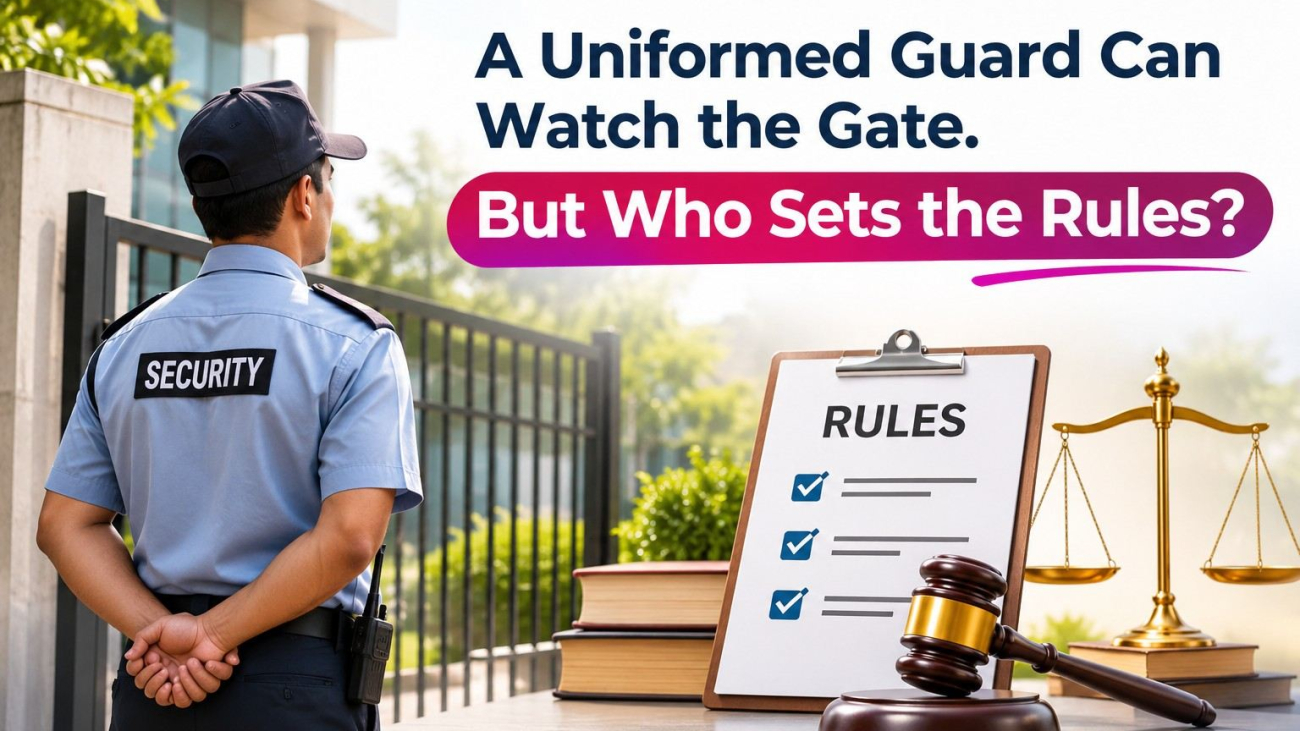
Guard implies someone who can say no, but at many properties, who is allowed to say yes is a more important question that remains unanswered.
Does a department head’s call to the gate give a contractor entry? Will the driver be able to pick up equipment without a signed release? Who can allow access after office hours if access has been restricted?
When a person wears a uniform, he or she can be seen at the entry. It does not provide any answers to those questions. If the rules are unclear, then the guard has to cut deals with each visitor. But good uniformed security guard services rely on something not as visible as the uniform itself: clarity of authority, clear instructions and the ability to call on someone when they don’t know.
If you have an exception, it must have an owner.
When security instructions have to be precise, they are often the shortest. “Check all visitors” doesn’t describe the type of visitor that is expected but not on the list or a manager asking for an exception.
A good site instruction gives a description of who is able to give permission to enter, what to do if the person is not available and where the decision is to be written.
For example: Contractors must be confirmed by the maintenance contact. If not reachable, hold entry and call the duty manager.
That provides the guard a guideline, instead of a decision to negotiate. It additionally offers management a means to look back at what occurred.
Gate Duties Differ by Property
A security guard working in Selangor could be at a Klang distribution centre, or a Petaling Jaya condominium or an office building in Subang Jaya. It is important to recognise that there are significant distinctions between the three properties, and that they are all considered “gate security.”
A distribution centre is a place where delivery timetables, vehicle records and the authorisation to release vehicles can be the main concern of the day. Visitors, residents, ride/handling drivers and contractors can share the same entrance at a condominium. Workplaces such as offices can have very different access arrangements during the day and night.
A guard at a heavily trafficked entrance cannot also keep an eye on a loading area in a remote area. If both duties are important, the management must determine who is going to do which duty; otherwise, the guard will be left to improvise.
Most important skill: Know when not to guess
Suppose that a driver claims there’s an urgent delivery that’s been approved. Allowing the vehicle to come in may cause an issue. If refused without inspection, this could cause disruption of operations.
Follow the agreed verification path – contact the authorised person, record the outcome and escalate if approval is not confirmed.
That involves training, but also management’s availability.
The security guard in Malaysia should be aware of what his limits are. Guards are not police officers; a private security post is not expected to solve all disputes, maintenance problems and emergencies on its own. Escalation arrangements are included in the service, NOT an optional extra.
What Happens at Shift Handover?
What if the contractor was refused due to lack of confirmation? Is the following shift aware? Does facilities management know? Will this discussion be repeated tomorrow?
A good handover is more than just an in/out record. It specifies exceptions, approvals to be obtained, and follow-ups to be made. The record should be as brief as possible so that the guard using it will actually use it.
Inquire about any issues that occurred at the gate in the previous week, what issues required escalation and whether issues were resolved. Those answers paint more than a picture of a uniform.
Conclusion
When hiring a provider, it is important to ensure that they have a solid understanding of the work.
If you type in the phrase “uniform security guard Malaysia” or “security company near me” in a search engine, you will find companies that have trained security guards and professional security coverage.
Ask the provider to go over the busiest hour of your day. In situations of a long visitor queue, who is the one to manage deliveries? How are situations handled if the authorised contact doesn’t respond? Who covers a break? Who looks at the handover log?
In addition, check their current licence status on eSIMS, and check the training and supervision of the staff they are planning to have on your site.
A uniformed guard isn’t just a person standing at an entrance. They should have clear instructions, support when things get tricky, and a good means of passing information on. This should be the kind of investment that property managers should be making.